
In the fall of 2020, close to 10% of Rocky Mountain National Park was burned by the East Troublesome Fire. The majority of the burn happened on the western side of the Continental Divide, burning 193,812 acres in Grand County, destroying over 300 homes, and taking 2 lives. The East Troublesome Fire was Colorado’s second largest wildfire on record, taking second place only to the Cameron Peak Fire that concomitantly burned close by.
Just under two years have passed since this devastating wildfire ripped across Colorado’s mountains. Naturally, we were curious to see what things looked like, so we decided to go on a three day/two night backpacking trip through the core area of the fire on the western side of Rocky Mountain National Park. Here is what we found:
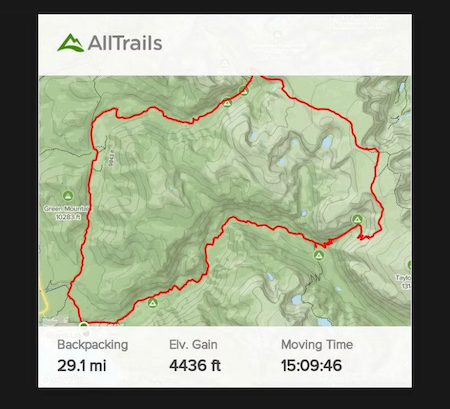
The Western Loop in the southwestern corner of Rocky Mountain National Park. We hiked the loop in 3 days. Day 1: North Inlet Trail to North Inlet Junction. Day 2: North Inlet Junction to Flattop Mountain and down the Tonahutu Creek Trail to Granite Falls. Day 3: Granite Falls to the Tonahutu Creek Trailhead.
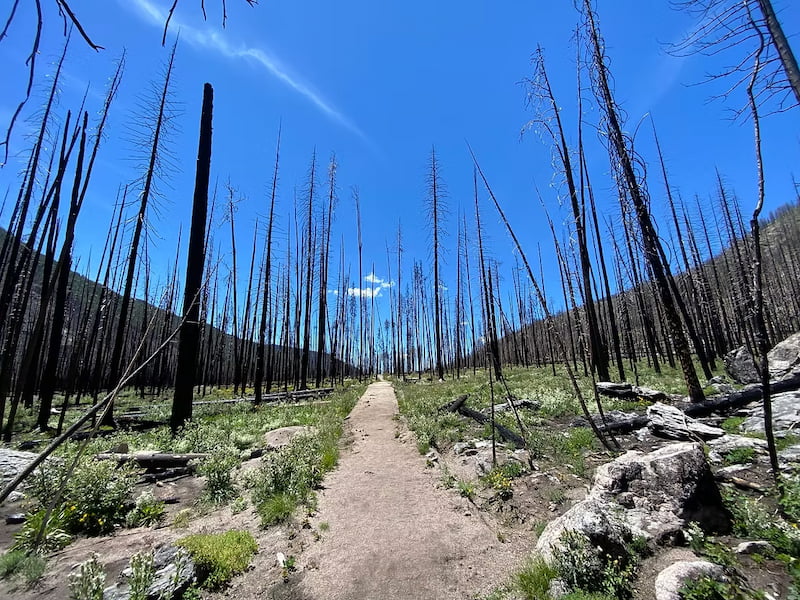
A burned stand of Lodgepole Pine (Pinus contorta) with regenerating undergrowth on the North Inlet Trail.
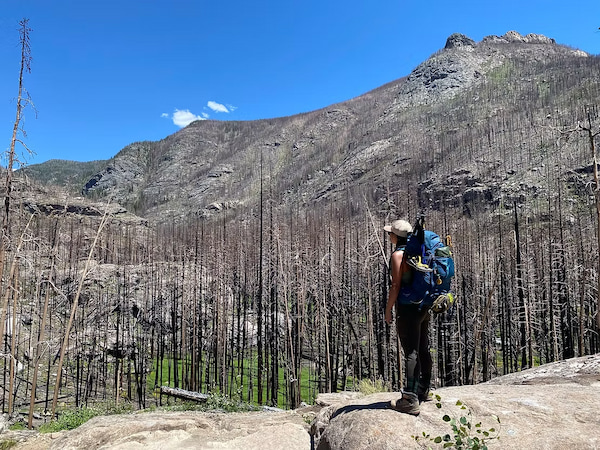
Angie stands above a relatively green seep amidst the burned forests of western Rocky Mountain National Park.
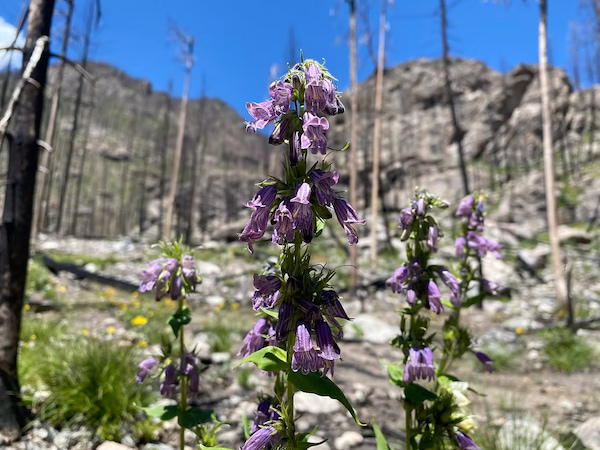
Whipple's Penstemon (Penstemon whippleanus) was one of many colorful wildflowers blooming in the understory of the burned forest.
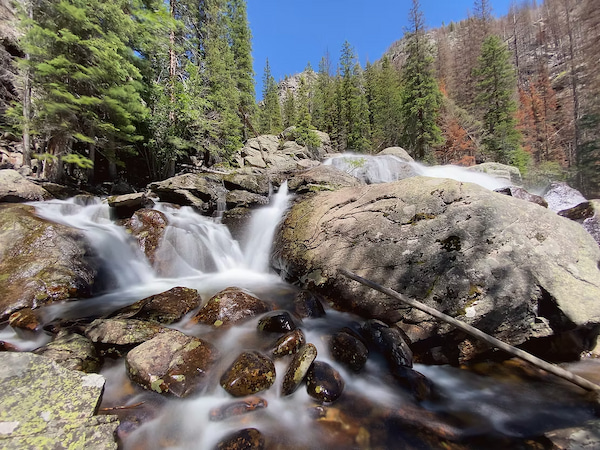
We took a moment's rest to admire the rushing torrents of Cascade Falls.
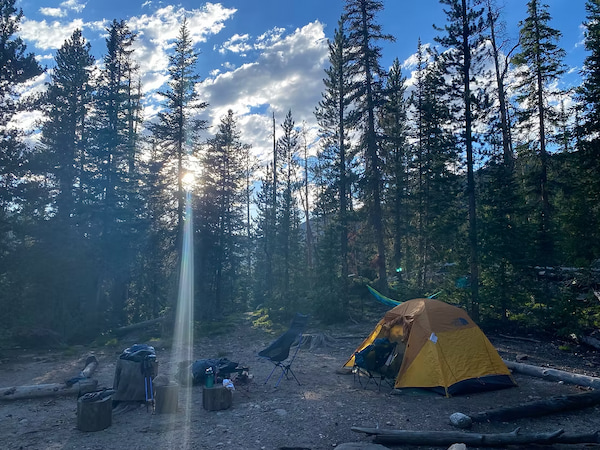
Our campsite at North Inlet Junction.
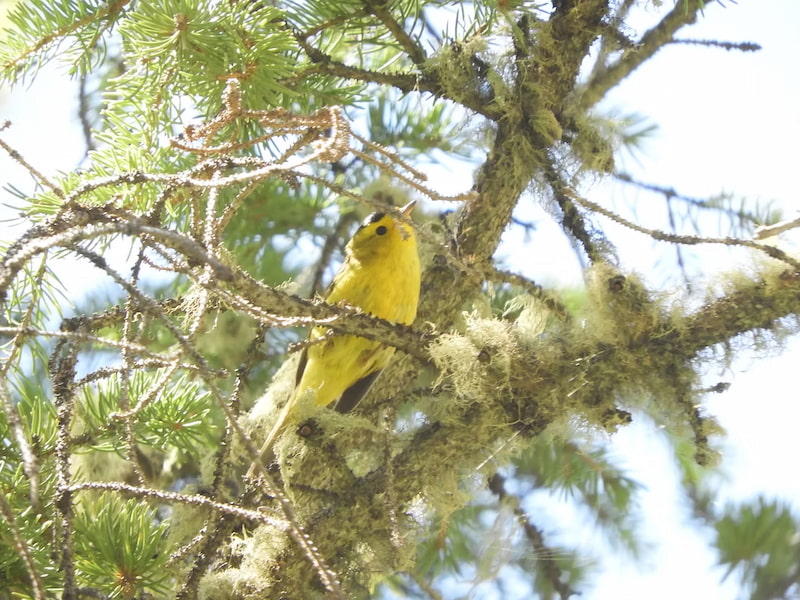
When Thomas Say first recorded the Wilson’s Warbler (Cardellina pusilla) on the Long’s expedition in 1820, he called it the Capped Flycatcher (Muscicapa pusilla), following Alexander Wilson’s description of Green Black-capped Flycatcher. It was later discovered to be a warbler and named after the preeminent Ornithologist.
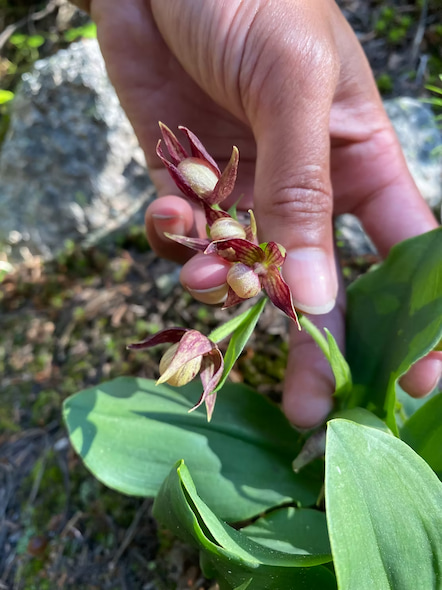
We found this Clustered Lady's Slipper Orchid (Cypripedium fasciculatum) in the subalpine forest above North Inlet Junction. This species is classified as Vulnerable on the IUCN red list.
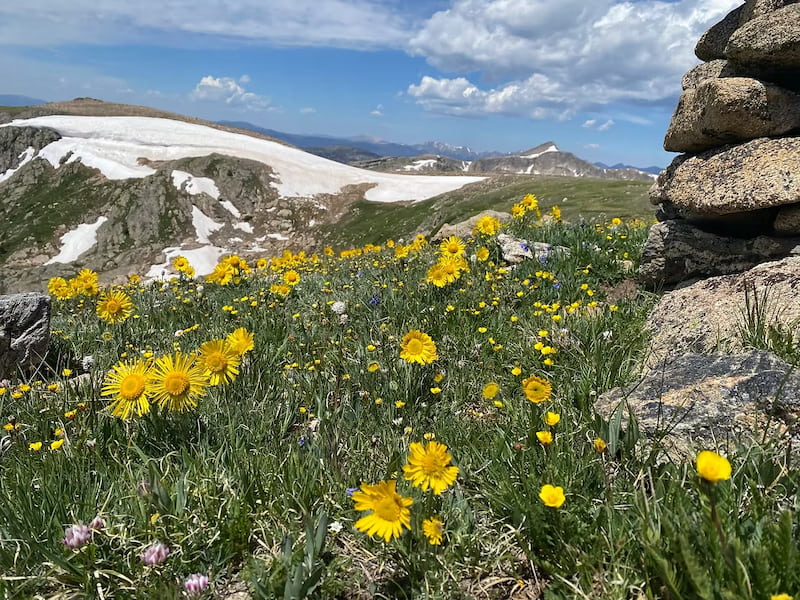
Early July is high time for Alpine Sunflower (Hymenoxys grandiflora). In the tundra, we found hundreds all growing with an eastern orientation. Colloquially known as the “old man of the mountain,” this species has a silvery pubescence along the stem to help conserve moisture and protect it from harsh mountain winds.
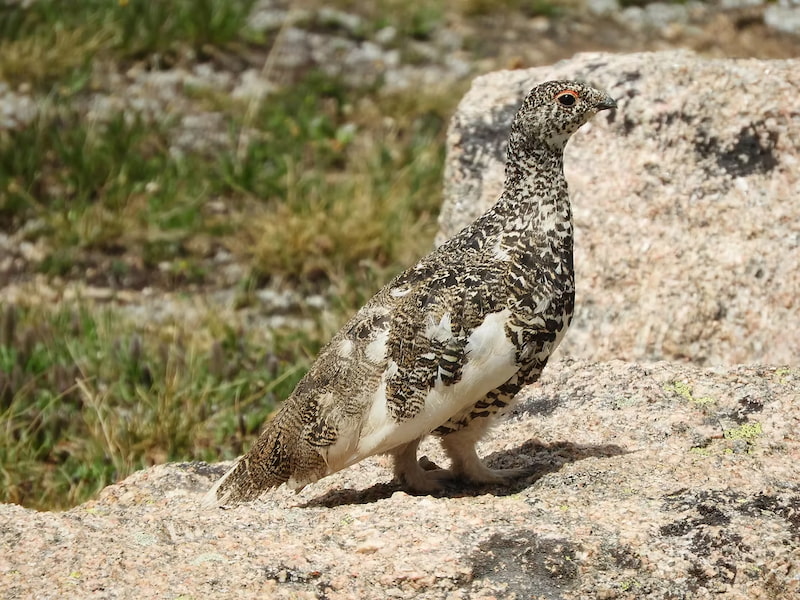
Angie nearly tripped on this White-tailed Ptarmigan (Lagopus leucura) during our hike across the tundra near Flattop Mountain. This species has feathered legs and long, wide feet to help it distribute its weight evenly across the snow. In the winter, the ptarmigan endures the harsh climate above tree line by seeking refuge in snow caves.
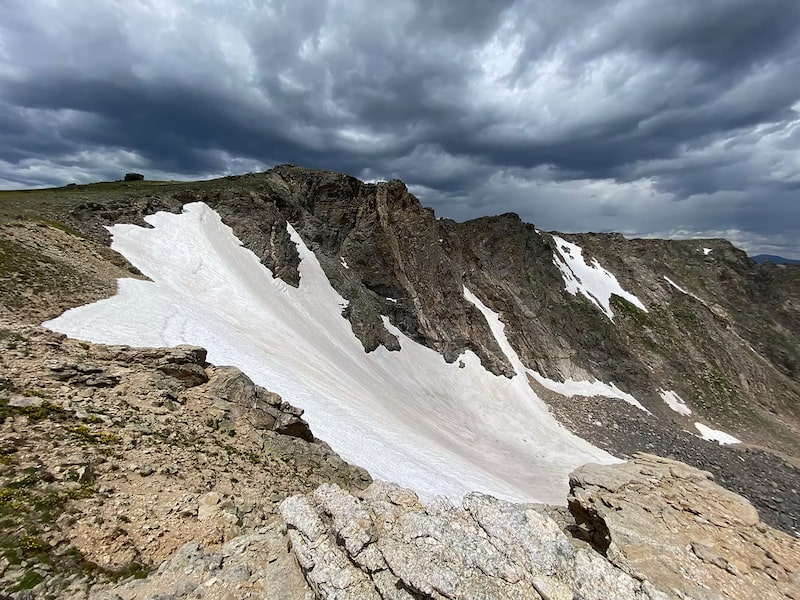
The Tyndall Glacier is one of eight remaining glaciers in Rocky Mountain National Park. It is the remains of a relatively recent glacial advance that started around 4,000 years ago. The glacier reached its peak around 150 years ago. Tyndall Glacier is named after John Tyndall, a 19th-century scientist and alpinist who studied glaciers and discovered the greenhouse effect.
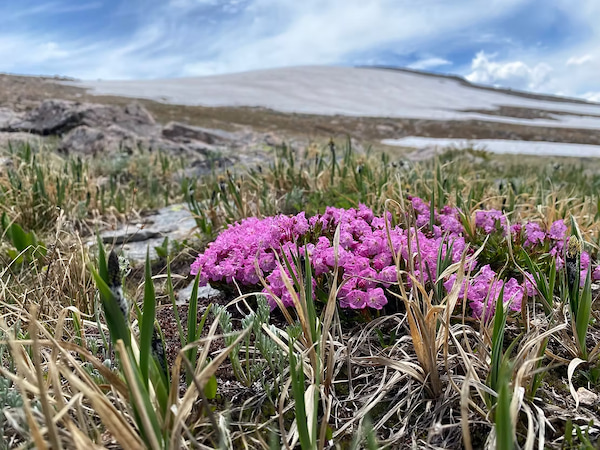
We found this western bog laurel (Kalmia microphylla) near a melting snowfield that we filtered water from. This is essentially a dwarf, alpine version of our more familiar mountain laurel.
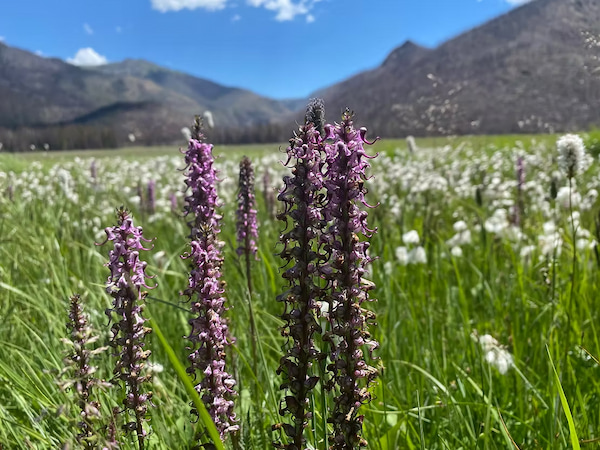
Elephanthead Lousewort (Pedicularis groenlandica) growing with American Bistort (Polygonum bistortoides) in a montane meadow near the Big Meadows area of Tonahutu Trail.
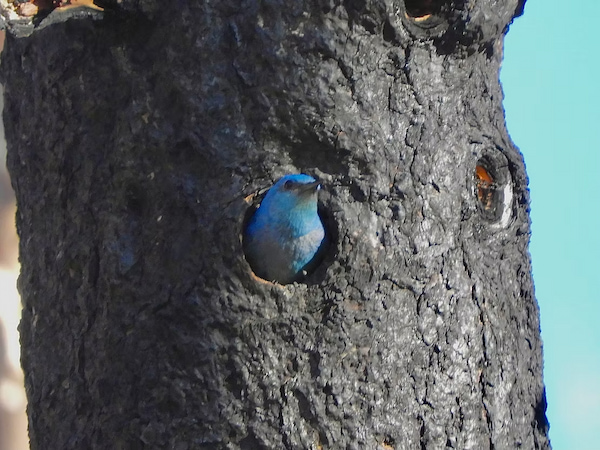
A family of Mountain Bluebirds (Sialia currucoides) nested in a burned snag behind our campground at Granite Falls.
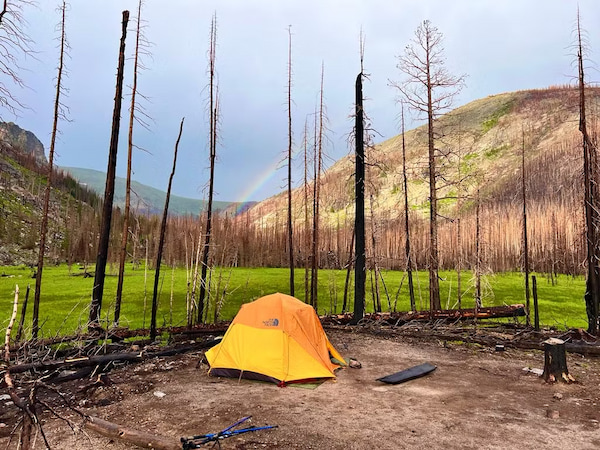
Our campsite in an exposed burn area near Granite Falls. Note the rainbow in the back formed by the incoming front of wet weather.
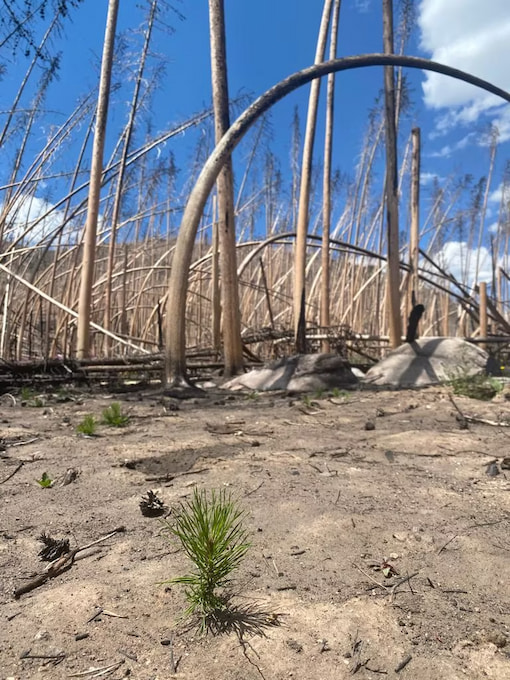
An area where the fire must have been extremely hot and gusty. A new generation of Lodgepole Pine (P. contorta) is emerging in the understory.
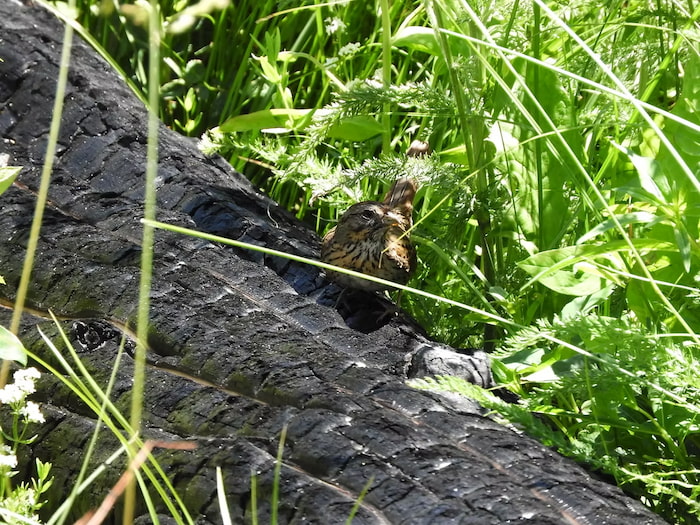
The open montane habitats along the Tonahutu trail provide the ideal habitat for the Lincoln’s Sparrow (Melospiza lincolnii). John James Audubon named this sparrow after his friend Thomas Lincoln. On their expedition to the Labrador coast, Lincoln had managed to bring back a specimen for study.
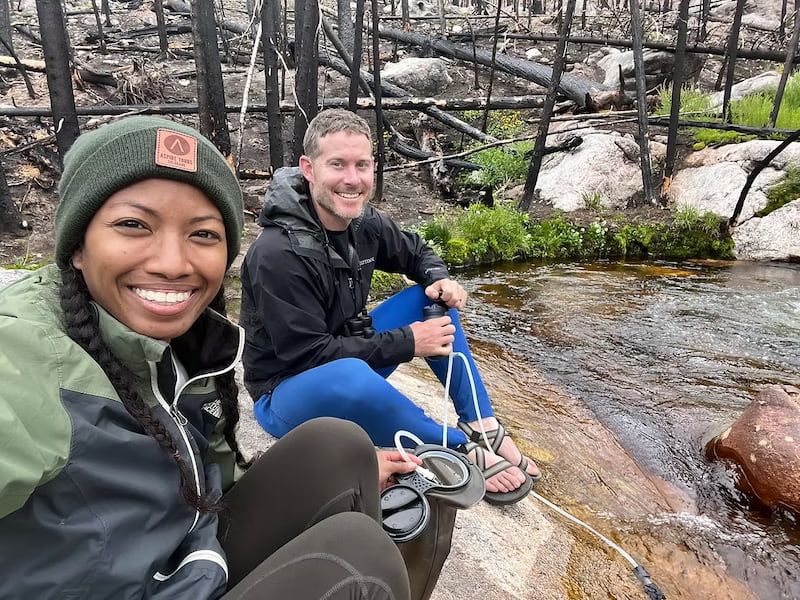
Angie and I filtering water near our campsite at Granite Falls.
Here is a video of our entire Western Loop adventure. Enjoy!
And of course check out more posts about our backpacking adventures through America’s great National Parks!
